
- Home
- Services
- Cosmetic Dentistry
- Clear Aligners
Clear Aligners
A discreet way to refine alignment
Custom, removable trays that gradually improve selected crowding and spacing — without braces. At Sunstone Dental in Richmond, we plan aligner care around your bite, not a one-size series, with easy access from Katy, Fulshear, and West Houston.
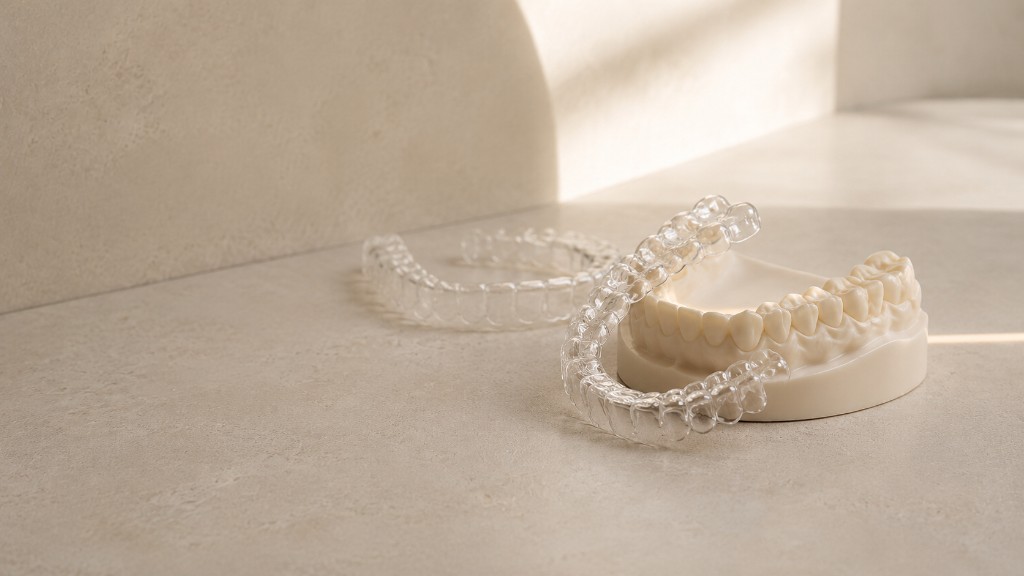
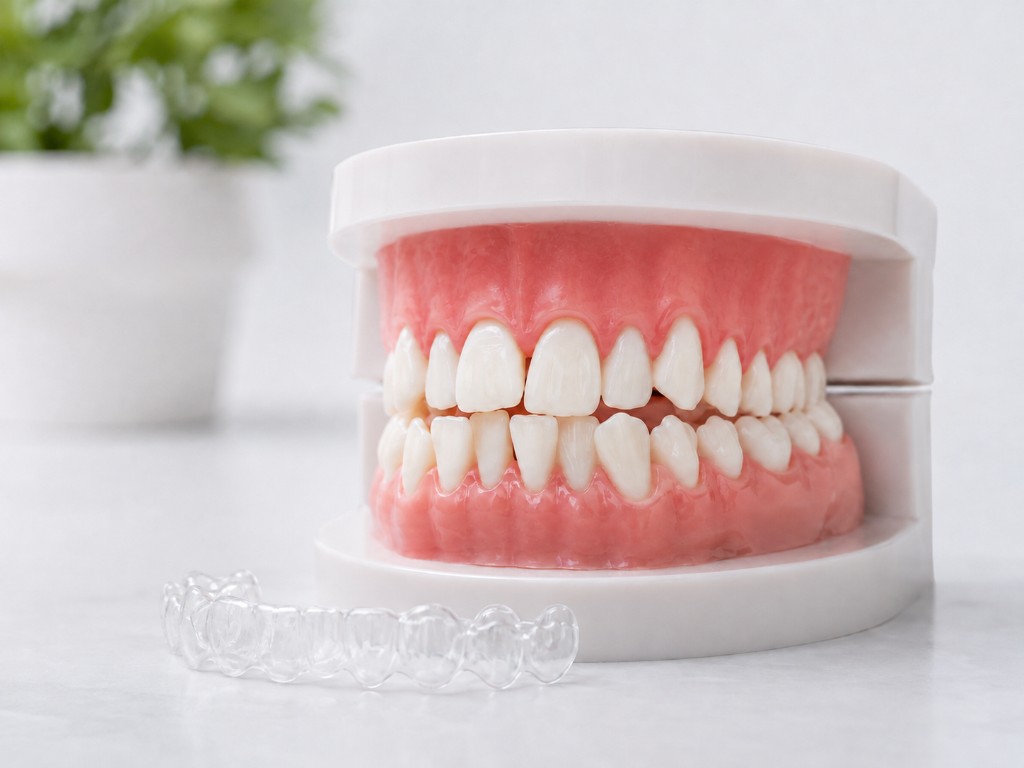
Trays that move teeth — a little at a time
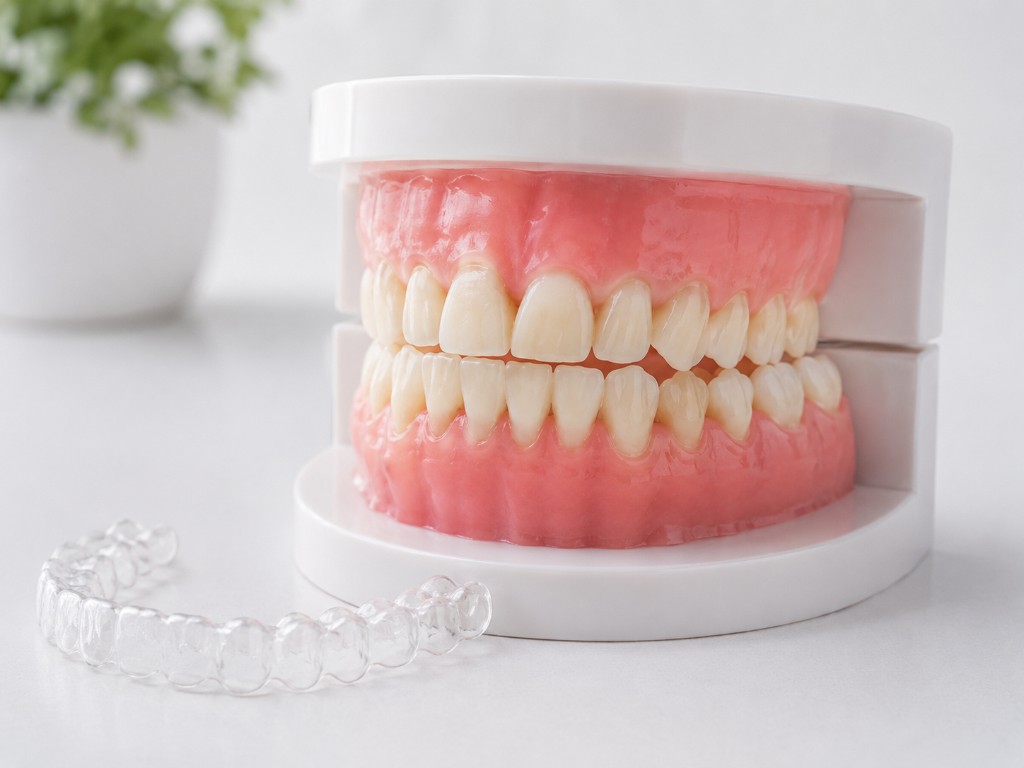
Clear aligners are thin, custom trays that sit over the teeth and are swapped through a planned series. Each set makes a small change. Worn most of the day and taken out to eat, brush, and floss, they are a discreet option for adults with mild crowding, small gaps, or similar concerns.
They are not braces, and they are not the right tool for every bite. After an examination at our Richmond office, we’ll say whether aligners are a reasonable path — or whether another approach, a referral, or no movement at all makes more sense.
What clear aligners can improve
Aligners are used here for selected, mostly cosmetic alignment concerns — not as a substitute for full orthodontics.
- Mild crowding
- Small gaps between teeth
- Minor tooth rotation
- Relapse after previous braces
- Pre-cosmetic alignment
What this approach can offer
Patients often choose aligners when they want a quieter alternative to braces for a limited concern — and when they are ready to wear the trays as planned.
-
Low-profile trays
Clear plastic sits close to the teeth, so day-to-day life looks more like usual than metal brackets and wires.
-
Removable when you need it
Trays come out for meals and cleaning. You brush and floss as you normally would — then put them back in.
-
Planned from a digital scan
Records help map small movements before you start, so you can see the intended direction — not a surprise at the end.
-
Smooth to wear
There are no wires to catch on the lips. Some pressure is normal as teeth shift; we talk through what that feels like.
-
A step in a smile plan
Straightening first can make whitening or veneers simpler later — when those treatments are even part of the picture.
-
Built around adult life
Visits are for checking progress and the next sets — not frequent wire changes — which many adults find easier to keep.
A good candidate — and where they fall short
Aligners work best when the teeth and gums are healthy and the movement needed is modest. An examination is how we decide — not a photo or a checklist.
When aligners may be a reasonable option
- Healthy teeth and gums
- A mild crowding or spacing concern
- A preference for something discreet
- Willingness to wear trays most of the day
When another approach is the better first step
Complex movement belongs with traditional orthodontics or a specialist. Aligners are not a workaround for those cases.
- Severe crowding
- Significant bite problems
- Large tooth movements
- Impacted teeth
- Skeletal jaw discrepancies
If aligners are not the right tool, we will say so. That may mean watching and waiting, treating decay or gum health first, or referring you for comprehensive orthodontics.
Your aligner treatment, step by step
Most cases follow a clear path from first visit to retainers. How long it takes depends on the movement needed and how consistently the trays are worn.
-
Consultation
We look at your bite, your goals, and whether movement is even the right tool
-
Digital scan
Records capture how the teeth sit today so a series can be planned
-
Treatment plan
We review which teeth move, wear time, and a realistic timeline
-
Wear your trays
Aligners are worn most of the day, including overnight, and swapped as directed
-
Progress visits
We check that teeth are tracking and issue the next sets
-
Retainers
After the series, retainers help keep the new position from drifting
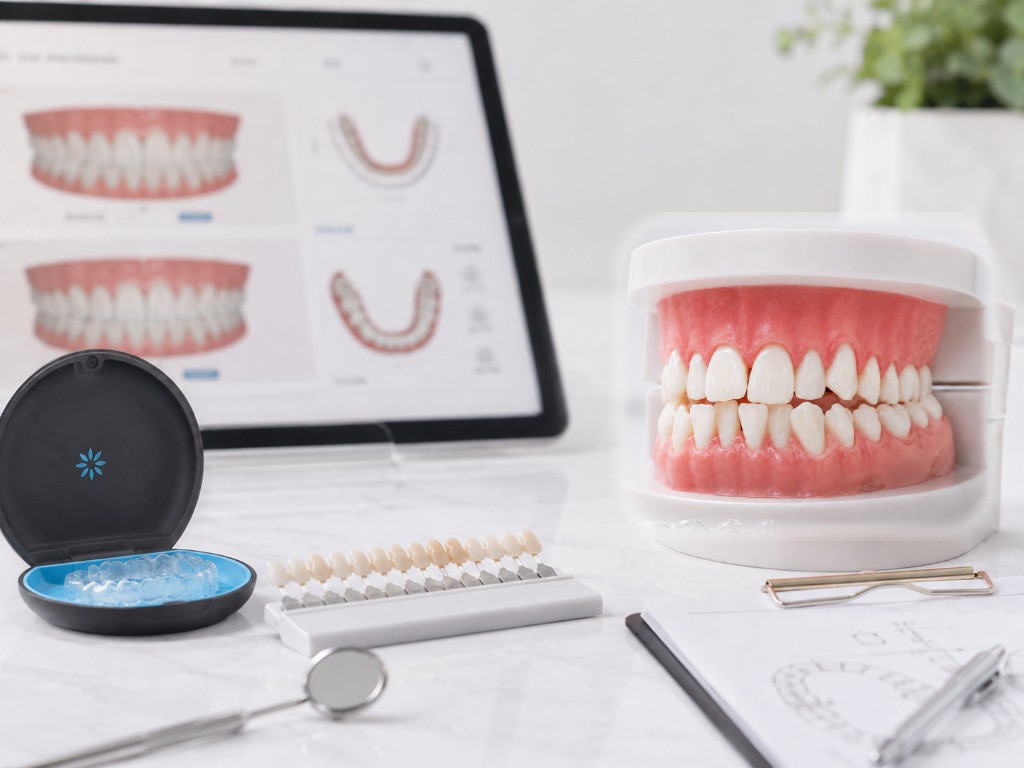
Aligners are one part of a smile plan
Aligners change position. They do not change color, chip repair, or the shape of a tooth. If those things still matter after the teeth have settled, whitening or veneers can follow — only when they actually help.
For some patients, alignment is the whole request. For others it is the first step before a cosmetic visit. We will not add treatments you do not need.
-
Clear Aligners
Refine how the teeth sit
-

Teeth Whitening
Brighten natural enamel after they have settled
-

Veneers
Refine shape and color if position was only part of the picture
Straighter — within what your bite allows
How much the smile changes depends on the starting alignment, how faithfully the trays are worn, and whether the case was a good aligner case to begin with. Results vary, and they are not guaranteed from a photograph or a website.
A few things worth knowing:
- Trays only work when they are worn as directed — missed hours slow or stall progress
- Some pressure with each new set is expected; ongoing pain is not
- Teeth can drift again without retainers after the series ends
- Attachments or polish between teeth may be part of selected cases
- Active decay or gum disease needs to be treated before movement starts
We do not promise a specific timeline or a particular smile from this page. Your consultation is where we look at what is realistic for your teeth and talk through whether aligners — or a different approach — is the right fit.
Why patients choose Sunstone for aligners
Cosmetic care here is planned and carried out by one dentist, Dr. Jimmy Wei — from the first conversation through the visits that follow the last tray.
-
Honest case selection
We recommend aligners when the movement is modest enough to belong here. If a specialist is the better next step, we’ll say so.
-
One dentist throughout
You see the same person at the consult, the scan, and the progress visits — so the plan stays tied to your bite, not a rotating schedule.
-
A full cosmetic picture
Alignment can stand alone, or it can sit beside whitening, veneers, or gum work as part of a larger smile plan.
Related cosmetic treatments
Aligners are one part of cosmetic care at Sunstone. These treatments are often considered alongside — or instead of — movement, especially when color or shape is also on your mind.




Common Questions About Clear Aligners
How much do clear aligners usually cost?
The cost depends on how much tooth movement is needed and how complex the case is. A small correction may require fewer aligners than a more involved bite or crowding problem. After reviewing your teeth and digital scan, we can give you a clear treatment plan, estimated timeline, and cost before you decide.
Do clear aligners really work?
Yes, clear aligners can work very well for the right case. They can be used to improve crowding, spacing, rotations, and selected bite problems by moving the teeth gradually through a planned series of trays. The important part is choosing the right cases and wearing the aligners consistently.
Can clear aligners straighten bottom teeth?
Yes. Clear aligners can move both upper and lower teeth, including crowded or rotated lower front teeth. Whether the lower teeth can be treated alone or should be planned together with the upper teeth depends on your bite. We look at the whole bite rather than straightening one row of teeth in isolation.
Why might a dentist recommend braces instead of clear aligners?
Clear aligners are not the best tool for every orthodontic problem. Certain tooth movements, more complicated bite problems, or cases that require very precise control may be treated more predictably with braces or by an orthodontist. If aligners are not a good fit for your case, we will tell you that rather than trying to force the treatment.
How long does clear aligner treatment take?
It depends on how much movement is needed. Small cosmetic corrections may take considerably less time than cases involving more crowding or bite changes. Your digital treatment plan gives us a much better estimate once we see where the teeth are starting and where they need to move.
Will I need a retainer after clear aligners?
Yes. Teeth naturally have a tendency to move after orthodontic treatment, so retainers are an important part of keeping the result. We will explain how often to wear your retainer after treatment and check the stability of your teeth over time.
Let’s see whether aligners are a fit
Book a visit and we’ll look at your bite, talk through what trays can and cannot do, and go from there. Convenient for patients from Katy, Richmond, and Fulshear.
- Comprehensive evaluation
- Honest case conversation
- Written treatment plan
- Insurance review
- No pressure, no obligation