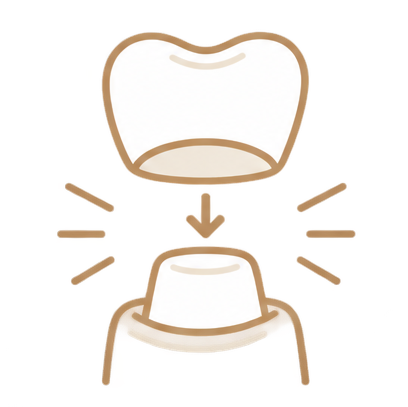
Metal partial denture
A cast metal framework is thin, strong, and durable. Metal clasps grip natural teeth securely and tend to last for many years with proper care.

Comfortable solutions for replacing missing teeth
Dentures restore the appearance and function of your smile when several teeth or a full arch need to be replaced. At our Richmond office — convenient for patients from Katy, Fulshear, and West Houston — we’ll help you understand which type fits your needs and guide you through each step with care.
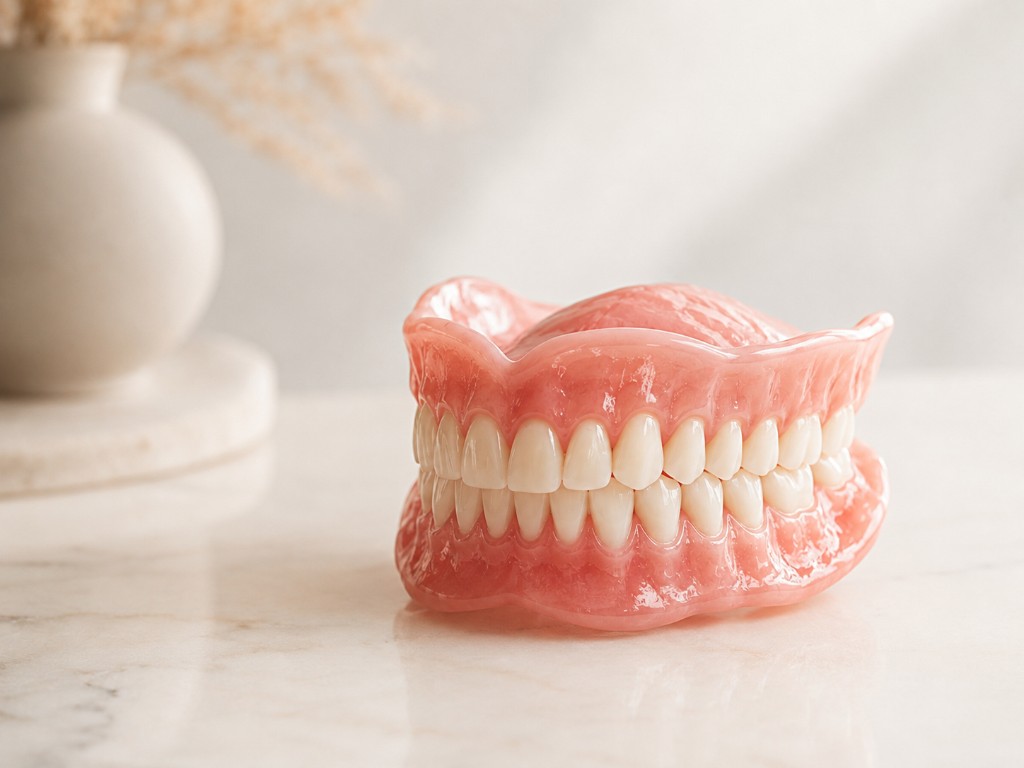
A denture is a custom-made appliance that replaces missing teeth and the surrounding gum tissue. Modern materials are lighter and more natural-looking than many people expect, and a well-fitted denture can restore your ability to eat, speak, and smile with confidence.
The right type depends on how many teeth are missing, the health of your gums and jawbone, and what you want from day-to-day comfort. That is what your evaluation is for — not a decision you need to make before your first visit.
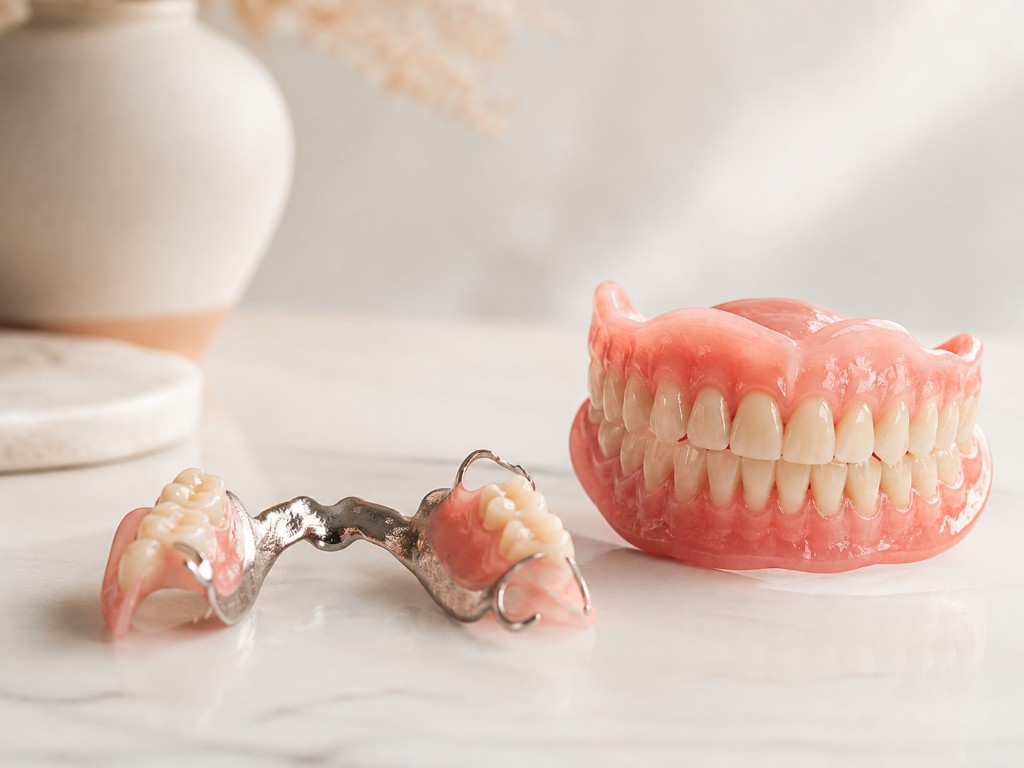
Most patients fall into one of two categories. Some need a full arch replaced; others still have healthy teeth that can help support a partial denture.
Replace all the teeth in an upper arch, a lower arch, or both. The base rests on your gums and is shaped to match the natural contours of your mouth.
Complete dentures are often considered when remaining teeth cannot be saved or when a full arch has already been lost.
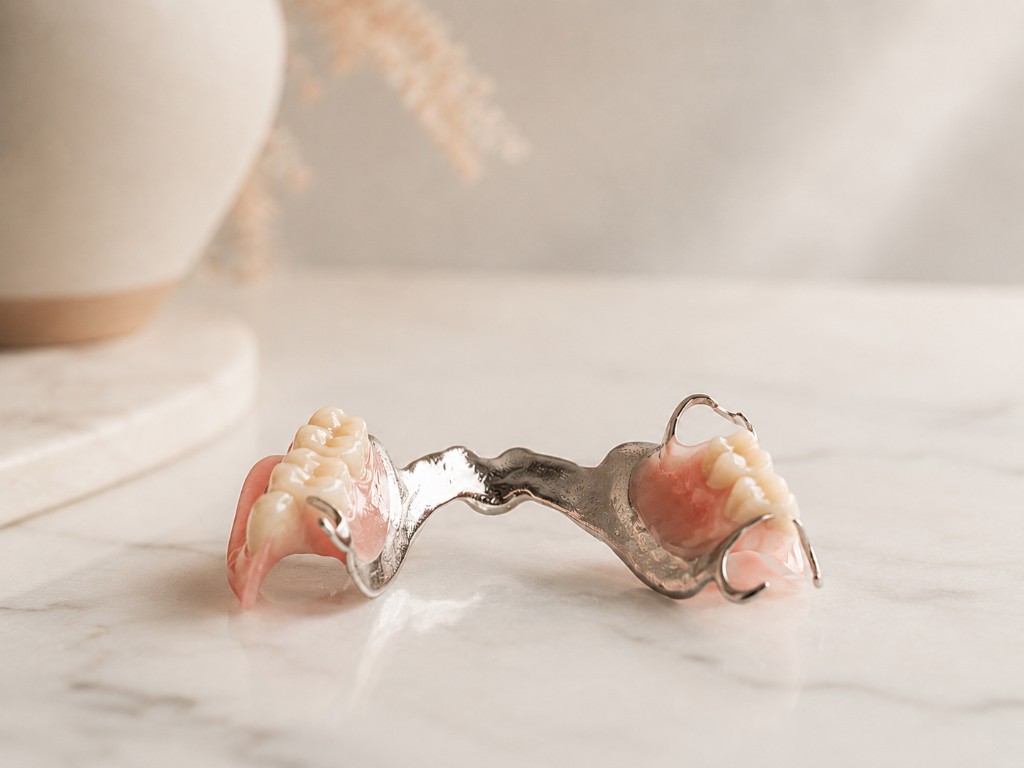
Replace several missing teeth while using your remaining natural teeth for support. Clasps or precision attachments hold the denture in place without covering teeth that are still healthy.
A partial can be a practical way to fill gaps, protect alignment, and restore chewing before more teeth are lost.
When a partial denture is the right choice, the framework can be made from different materials. Each has trade-offs worth discussing at your visit.
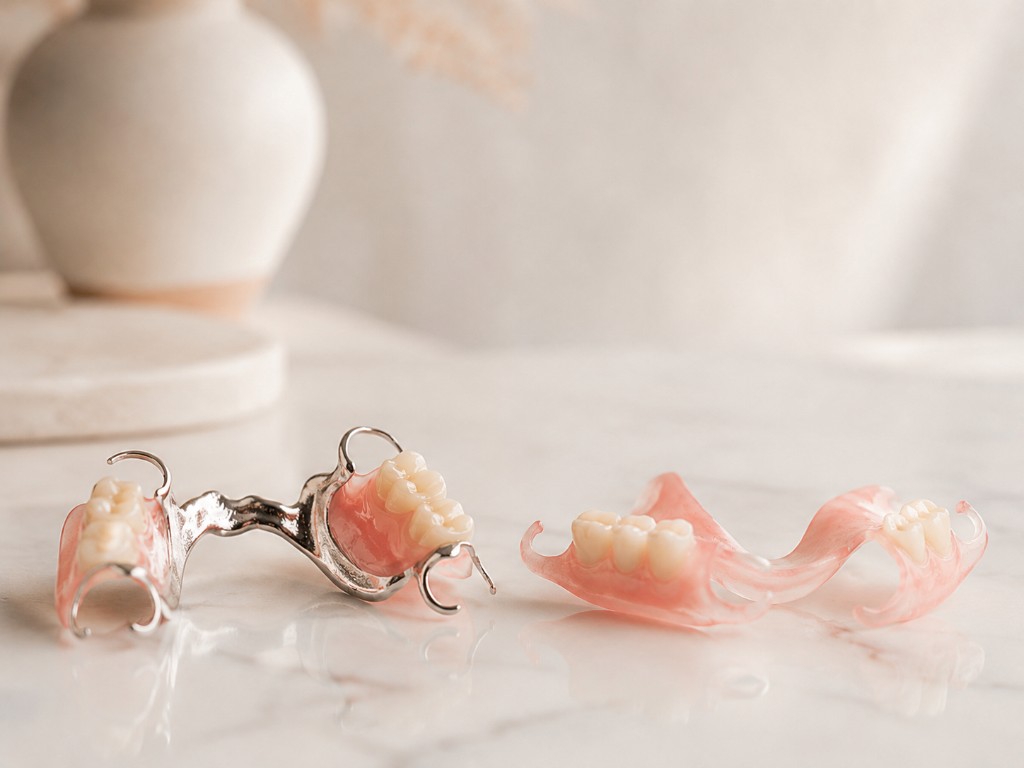
Metal partial Non-metal partial
A cast metal framework is thin, strong, and durable. Metal clasps grip natural teeth securely and tend to last for many years with proper care.
Flexible or tooth-coloured materials can look more natural, with clasps that blend into the smile. They may suit patients who prefer a metal-free option when clinically appropriate.
Implant-supported dentures can add stability when a traditional removable denture does not feel secure enough. Learn about dental implants
Teeth are shaped and shaded to complement your face and skin tone, so the result looks natural rather than uniform.
Replacing missing teeth helps with chewing and can improve speech that has been affected by gaps.
Removable dentures can be taken out for brushing and soaking, which makes daily hygiene straightforward.
One appliance can address multiple missing teeth without preparing every adjacent tooth the way a bridge sometimes requires.
Dentures are one of several ways to replace missing teeth. Whether they are the right choice for you depends on your oral health, your goals, and how you want your teeth to feel day to day.
Dentures may be worth considering if you:
If you have been told implants are not possible, dentures — including implant-supported designs — may still be part of the conversation. A comprehensive evaluation is the only way to know what applies to you.
Getting dentures is a process, not a single appointment. We’ll explain each stage before it begins so you know what to expect.
We examine your teeth, gums, and bite, discuss your goals, and determine which type of denture — complete, partial, or implant-supported — makes sense for your situation.
Precise records of your mouth are taken so the denture can be designed for fit, comfort, and a natural appearance. You’ll have a chance to discuss tooth shape and shade.
Your denture is delivered and checked for fit and bite. Follow-up visits help fine-tune comfort as you adjust to wearing it.
Every tooth-replacement option has trade-offs. We’d rather explain them honestly than promise something dentures cannot deliver.
Dentures are one path to replacing missing teeth. These are others we may discuss if they better fit your goals.
You don’t need to know whether you need a complete denture, a partial, or something supported by implants before your visit. Sunstone Dental will examine your mouth, explain what we find, and walk you through the choices so you can move forward with confidence.
The cost of dentures depends on the type of denture, the materials used, how many teeth are being replaced, and whether additional treatment is needed first. A partial denture, a complete removable denture, and an implant-supported denture are very different treatments. After examining your mouth, we can explain the options and give you a clear written estimate.
There is no single best denture for everyone. A partial denture may make sense when you still have healthy teeth, while a complete denture replaces a full arch. Implant-supported dentures can provide additional stability for some patients. We look at your remaining teeth, bone, bite, comfort, and priorities before recommending one option over another.
You may see dentures sold online or directly to consumers, but a denture still needs to fit your gums, bite, and jaw properly. A dental examination also helps identify teeth or gum problems that need attention before the denture is made. For something you will use every day to eat and speak, professional fitting and follow-up adjustments matter.
Removing removable dentures at night gives the gums and tissues underneath them time to rest and also gives you a chance to clean both your mouth and the denture thoroughly. Wearing dentures continuously can contribute to irritation and inflammation. Unless we give you different instructions during a specific stage of treatment, dentures generally should not stay in 24 hours a day.
There is usually an adjustment period. Speaking and chewing can feel different at first, and small sore areas sometimes develop as your mouth adapts. Most patients improve with practice and a few adjustments. If one area keeps rubbing or hurting, bring the denture back rather than trying to simply tolerate it.
They can offer more stability, especially when a traditional denture moves during eating or speaking, but they are not automatically the better choice for everyone. Implant-supported dentures require implant surgery, adequate bone, additional healing time, and a larger investment. We can compare the added stability with the extra treatment so you can decide whether it is worthwhile for you.
Schedule a consultation at our Richmond office. We’ll listen to your concerns, answer your questions, and help you find a solution that fits your life.