
- Home
- Services
- General Dentistry
- Tooth-Colored Fillings
Tooth-Colored Fillings in Richmond, TX
A repair that blends with the tooth around it.
Tooth-colored fillings restore a cavity or a small area of damage with a material chosen to sit quietly in the smile. They are part of general dentistry at our Richmond office — used when a filling is enough, and set aside when the tooth needs something stronger. Convenient for patients from Katy and Fulshear.
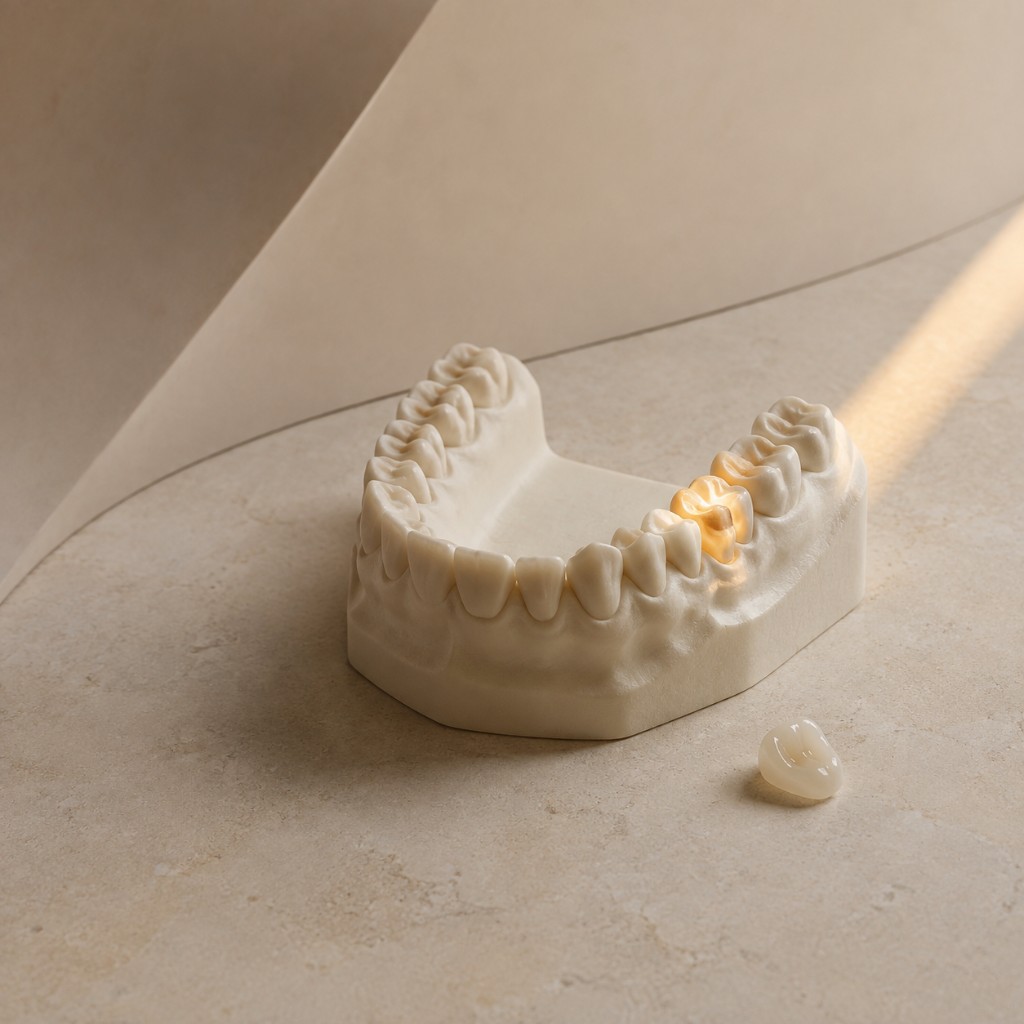
A bonded repair, in the shade of the tooth
A tooth-colored filling is a composite resin — a durable plastic and glass material — placed in layers and hardened with a curing light. It bonds to the tooth, which lets us keep more of the healthy structure than a restoration that has to be locked in by the shape of the hole alone.
The point is a tooth that works and does not announce itself. On a front tooth, shade and polish matter. On a back tooth, the bite and the seal matter just as much. Both are checked before you leave.
Fillings are for damage that is still limited
Cavities found at a checkup are the most common reason. They are not the only one.
-
A new cavity
Decay that has not reached the nerve can usually be cleaned out and filled. Waiting lets a small repair become a larger one.
-
A small chip or worn edge
A limited chip can often be bonded back into shape. A tooth that is cracked through, or worn flat, may need a different restoration.
-
A filling that leaked or broke
When an old filling no longer seals, bacteria can get underneath it. Replacing the filling is the fix if the tooth around it is still strong.
-
Sensitivity with a clear cause
A worn spot or a leaking edge can be sensitive to cold. Sensitivity from the nerve is a different problem, and a filling is not always the answer.
If the cavity is deep, or the tooth is cracked, we will talk about a crown or root canal treatment instead of forcing a filling to do a job it cannot hold.
Tooth-colored fillings and silver amalgam are not the same repair
Amalgam — the silver-colored filling many people already have — has a long record. Composite is what we use when we are placing a new filling and a match to the tooth matters.
-
Tooth-colored composite
Bonded in place, shaded to the tooth, and useful for both front and back teeth when the repair is not too large. It can stain over time, and a very large composite in a heavy bite can wear or chip sooner than a crown would.
-
Older metal fillings
A silver filling that is sealed, comfortable, and free of cracks does not have to be replaced because of its color. We recommend replacement when it is leaking, broken, or sitting in a tooth that has new decay — not as a routine swap for appearance alone.
The shade is chosen from your tooth, not from a standard white
Teeth are not one color. A canine is often warmer than a front tooth, and the edge of a tooth can be more translucent than the area near the gum. We use a shade guide beside the tooth, in ordinary light, and pick a composite that belongs in that range.
A filling does not bleach. If you are thinking about whitening, it is usually better to whiten first and match the filling to the new shade. Replacing a filling only to change its color is possible, and we will say when that is worth doing and when the current one is better left alone.

What treatment is like
A small filling is often finished in one visit. A tooth that is very sensitive, or a repair that turns out to be deeper than the X-ray suggested, may change the plan while you are in the chair. You will hear that before we continue.
-
Numbing, when you need it
Many fillings are more comfortable with local anesthetic. A very shallow spot sometimes does not need it
-
Removing the damaged part
Decay or the old filling comes out. Healthy tooth stays. We stop when the margin is clean
-
Placing and shaping
The composite is bonded in layers, hardened, and shaped to the bite and the contacts with the teeth beside it
-
Checking the bite
You close, we adjust high spots, and the surface is polished. Mild temperature sensitivity for a few days can be normal
Years, not a fixed warranty
A well-sealed filling often lasts several years, and many last longer. Size, the bite, grinding, and how easy the edge is to keep clean all change that. A small filling on a front tooth that is not under heavy load is a different story from a large one on a molar.
Nothing we place is permanent. At checkups we look for stains at the edge, a catch with the explorer, a crack, or a shadow on an X-ray. Those are the signs a filling is ready to be replaced — not the calendar alone.
When replacement is actually useful
We replace a filling that is leaking, fractured, or sitting over new decay. We also replace one that has fallen out, which is a common reason for a short visit. An intact silver filling that you dislike the look of can be changed, and we will talk about how much tooth that involves before we start.
If replacing it would leave the tooth thin, a crown or onlay protects it better than another large filling. That recommendation is about strength, not about selling a bigger procedure.
Related care


Common Questions About Tooth-Colored Fillings
Can a filling match the color of the tooth?
Yes. Composite fillings are made to be tooth-colored, and the shade is chosen against your tooth rather than from a single “white.” A filling in a visible spot can be blended carefully. One on a back chewing surface is still matched, though the bite and the seal matter more than a perfect photograph.
Very translucent edges and teeth with several shades in one surface are harder to copy. We will tell you if a filling will be noticeable, instead of promising it will disappear.
How long do tooth-colored fillings last?
Many last for years. Some need attention sooner if the filling is large, the bite is heavy, or decay starts at the edge. We do not quote a guaranteed number of years. Checkups are how we notice a filling that is starting to leak while the repair is still small.
Can you change the color of a filling later?
The material itself does not lighten with whitening gel. If the tooth around it gets brighter, or the filling has stained, the way to change the color is to replace the filling and match a new shade. That is reasonable when the mismatch bothers you. It is unnecessary when the filling is sound and the difference is only visible to us.
If whitening is part of the plan, do that first, then match. Matching first and whitening second is how fillings end up looking dark.
What shades are actually used?
A shade guide with a range of natural tooth colors — from warmer and deeper tones to lighter ones — not a single bright white. We hold it next to the tooth and pick the closest composite. Front teeth sometimes need more than one shade layered together. Back teeth usually need one well-chosen shade and a surface that feels right when you bite.
Cost depends on the size of the repair, the tooth, and your benefits. You’ll see an estimate before we start, including anything a current offer or your insurance changes.
Visit Sunstone Dental in Richmond, TX
23565 FM 1093, Suite 103Richmond, TX 77406
Filling visits are at the Richmond office on FM 1093, near Grand Parkway.
If a tooth is sensitive, chipped, or has a lost filling
Book a visit and we’ll see whether a tooth-colored filling is the right repair — or whether the tooth needs something else.
- Exam before treatment
- Shade matched to the tooth
- Written estimate
- A crown if a filling is not enough
- No pressure, no obligation