
- Home
- Services
- Cosmetic Dentistry
- White Spot Treatment
White Spot Treatment
Resin infiltration for selected enamel spots
White spots on teeth can linger after braces or from changes in enamel. For selected cases, resin infiltration can help those spots blend with the surrounding tooth — without covering it in a veneer. At Sunstone Dental in Richmond, we evaluate each spot first. Convenient for patients from Katy, Fulshear, and West Houston.
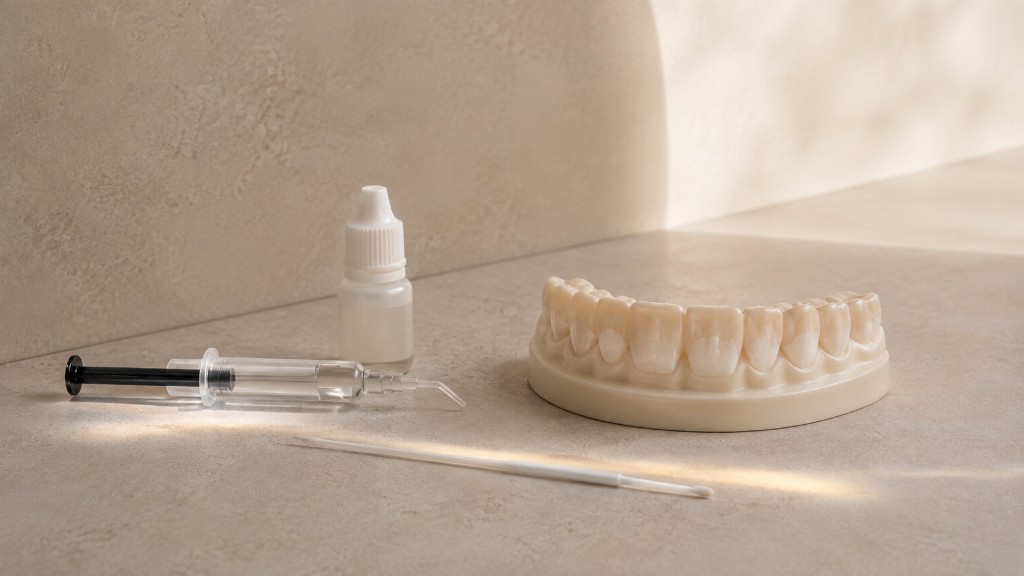

A conservative way to blend certain white spots
White spots are areas of enamel that look chalky or brighter than the rest of the tooth. They can appear after braces, from how the enamel formed, or from early mineral loss. They are not all the same — and they are not all treated the same way.
Resin infiltration is a minimally invasive technique. After the surface is prepared, a thin resin is drawn into porous enamel so the spot can take on a closer optical match to the tooth around it. The tooth itself stays. No veneer is placed. Whether that belongs in your plan depends on how deep the spot goes, not on how it looks in a photograph.
What resin infiltration can offer
When the clinical fit is right, this is a way to address selected white spots without covering the whole tooth.
-
Minimally invasive
In selected cases, little to no drilling is needed. The enamel is conditioned so resin can enter the porous area.
-
Your enamel stays
The tooth is not covered with a veneer. Healthy structure is kept wherever it can be.
-
Targets the spot
Treatment is aimed at the lesion itself — not at changing the shape or shade of the whole smile.
-
Often one visit
When a spot is a good candidate, infiltration is typically completed in a single appointment.
-
Can pair with whitening
Some smiles benefit from whitening first, so overall shade and the treated spots are planned together.
-
Honest case selection
If a spot is too deep, or a veneer would serve you better, we will say so before anything is done.
When resin infiltration may help — and when it may not
This treatment is for selected white spots, not every mark on enamel. An examination is how we decide what is realistic.
May be a good option for
- Certain white spots after braces
- Mild to moderate enamel opacity
- Selected fluorosis-like spots
- Patients wanting a conservative cosmetic approach
May not be enough for
- Deep or severe enamel defects
- Cavities or broken enamel
- Spots that extend too deeply into the tooth
- Patients seeking a perfectly uniform smile
A consultation is required. If infiltration is not the right tool, we will talk through whitening, bonding, veneers, or simply leaving the spots alone.
How resin infiltration works
Most visits follow a short, clear sequence. How long it takes depends on the number of spots and whether they are good candidates.
-
Evaluate the spot
We determine whether the white spot is a good candidate for treatment
-
Condition & infiltrate
The surface is prepared and a low-viscosity resin is absorbed into the lesion
-
Blend & polish
The resin is cured and polished to help the spot appear less noticeable
This is a no-drill or minimal-drill approach in selected cases — a clinical judgment, not a default.
Improvement is the goal — not a guaranteed disappearance
Resin infiltration can make some white spots much less noticeable. How much a spot improves depends on its depth, cause, and the enamel around it. Complete blending is not promised, and some spots will still be faintly visible.
A few things worth knowing:
- Not every white spot is a candidate for resin infiltration
- Results vary; some spots improve more than others
- Whitening does not treat individual white spots on its own
- Deeper defects may still need bonding or veneers
- An examination is how we decide what is realistic for your teeth
We do not promise a specific outcome from a photograph or a website. Your consultation is where we look at what is realistic for your enamel and talk through whether resin infiltration — or a different approach — is the right fit.
Whitening, resin infiltration, or veneers
These treatments do different jobs. The right one depends on whether you want to lighten overall shade, blend a specific spot, or change the look of the whole tooth.
-
Whitening
Overall tooth shade
Lightens natural enamel across the smile. It does not target individual white spots, and it will not change the color of existing veneers or crowns.
-
Resin infiltration
Certain white spots
Aimed at selected enamel opacities, so the spot can blend more closely with the tooth around it — without covering the front of the tooth.
-
Veneers
Deeper or more complex concerns
Thin shells bonded to the front of teeth. Often the better path when spots are deep, or when shape, chips, and color all need to change together.
Why patients choose Sunstone for white spot treatment
Cosmetic care here is planned and carried out by one dentist, Dr. Jimmy Wei — from the first conversation through to the visit that finishes it.
-
Conservative first
We start with the least invasive option that can still help. If a smaller change — or none at all — is the better path, we’ll say so.
-
Honest about limits
Not every spot can be blended. You will hear what is realistic before treatment, not after.
-
Planned with your full smile
Infiltration can be sequenced with whitening, bonding, or veneers so the spots and the rest of the smile are designed together.
Related cosmetic treatments
White spot treatment is one part of cosmetic care at Sunstone. These options are often considered alongside — or instead of — resin infiltration.






Common Questions About White Spots on Teeth
What causes white lines and spots on teeth?
White spots can have different causes. Some develop when enamel is forming, including fluorosis or other enamel changes. Others appear after braces or from early mineral loss when plaque and acid repeatedly sit on the tooth. Because different causes can look very similar, we evaluate the enamel before recommending treatment.
Do white spots on teeth mean tooth decay?
Not always. A chalky white area can be an early sign of enamel demineralization and may be the first stage of a cavity, but white spots can also come from fluorosis or the way the enamel developed. The appearance alone does not tell us which one it is, so we first determine whether the area is active decay or a stable enamel spot.
Do white spots on teeth go away on their own?
Sometimes early mineral loss can improve when the cause is controlled and the enamel is able to remineralize, especially before a true cavity forms. White spots caused by fluorosis or developmental enamel changes generally do not simply disappear on their own. If the spot remains visible, cosmetic treatment may still be an option.
Is it possible to remove or reduce white spots on teeth?
Often, yes — but the right treatment depends on what caused the spot and how deep it goes. For selected shallow white spots, resin infiltration can make the area blend more closely with the surrounding enamel without covering the tooth with a veneer. Deeper defects may respond better to bonding, veneers, or another approach. Complete disappearance cannot be guaranteed.
What toothpaste is best for white spots?
There is not one toothpaste that removes every type of white spot. Fluoride toothpaste can help strengthen and remineralize enamel when early mineral loss is the problem, but toothpaste will not erase fluorosis or many developmental white spots. If a spot has been there for a long time, it is better to identify the cause before trying different whitening or remineralizing products.
How much does it cost to remove white spots from teeth?
The cost depends on the cause, how many teeth are involved, and which treatment is appropriate. Treating one or two selected spots with resin infiltration is very different from treating widespread fluorosis or deeper enamel changes that may require bonding or veneers. After examining the spots, we can tell you which option makes sense and give you a clear estimate.
Let’s find the right cosmetic option for you
Book a consultation to see whether resin infiltration, whitening, bonding, or veneers is the better fit. Convenient for patients from Katy, Richmond, and Fulshear.
- Comprehensive evaluation
- Written treatment plan
- Honest candidacy assessment
- Insurance review
- No pressure, no obligation